
Yorba Linda Root Zone Calculation for TPZ Fencing
Imperial Highway Fence Rental provides expert Root Zone Calculation services for TPZ Fencing in Yorba Linda, ensuring compliance with local regulations. Our step-by-step guide helps you avoid municipal fines while protecting tree health in areas like Vista Del Verde and East Lake Village. Trust our local expertise in Yorba Linda's unique climate conditions.
Root Zone Calculation for TPZ Fencing: Compliance Guide
When we set up Tree Protection Zone fencing around a tree in Yorba Linda, the first step is calculating the root zone accurately. We start by measuring from the trunk out to the drip line—the edge of the canopy where rain drips off leaves. This radius marks the critical area where roots thrive and need shielding from construction traffic or soil compaction. Our crew installs temporary fencing just outside this zone, using equipment that won’t disturb the soil or roots. This method aligns with local regulations and protects trees in neighborhoods like Vista Del Verde and Fairmont Hill, especially given Yorba Linda’s dry climate with minimal rainfall and high cooling degree days. We make sure the fencing stands firm against Santa Ana winds, just like back in 2006 when Ricky learned the hard way about securing fence lines fast.
Calculation Steps
- Identify the drip line of the tree to determine the Root Protection Zone (RPZ) boundary.
- Measure the radius from the tree trunk to the drip line for accurate TPZ fencing placement.
- Ensure fencing installation does not penetrate or compact soil within the RPZ.
- Use temporary fencing equipment designed for easy setup and removal without soil disruption.
- Verify compliance with local tree protection ordinances specific to Yorba Linda, CA.
| Step | Description | Why It Matters |
|---|---|---|
| 1. Locate Drip Line | Measure canopy edge to define root zone boundary. | Protects critical root area from damage. |
| 2. Calculate Radius | Measure distance from trunk to drip line. | Ensures TPZ fence encloses the entire root zone. |
| 3. Install Fence Outside RPZ | Set temporary fencing beyond root zone perimeter. | Prevents soil compaction and root injury during construction. |
| 4. Use Non-Invasive Equipment | Choose fencing hardware that doesn’t penetrate soil. | Preserves root integrity and complies with local codes. |
| 5. Confirm Compliance | Review Yorba Linda tree protection ordinances before installation. | Meets legal requirements and avoids penalties. |
Root Zone Calculation for TPZ Fencing: Compliance Guide — Part 2
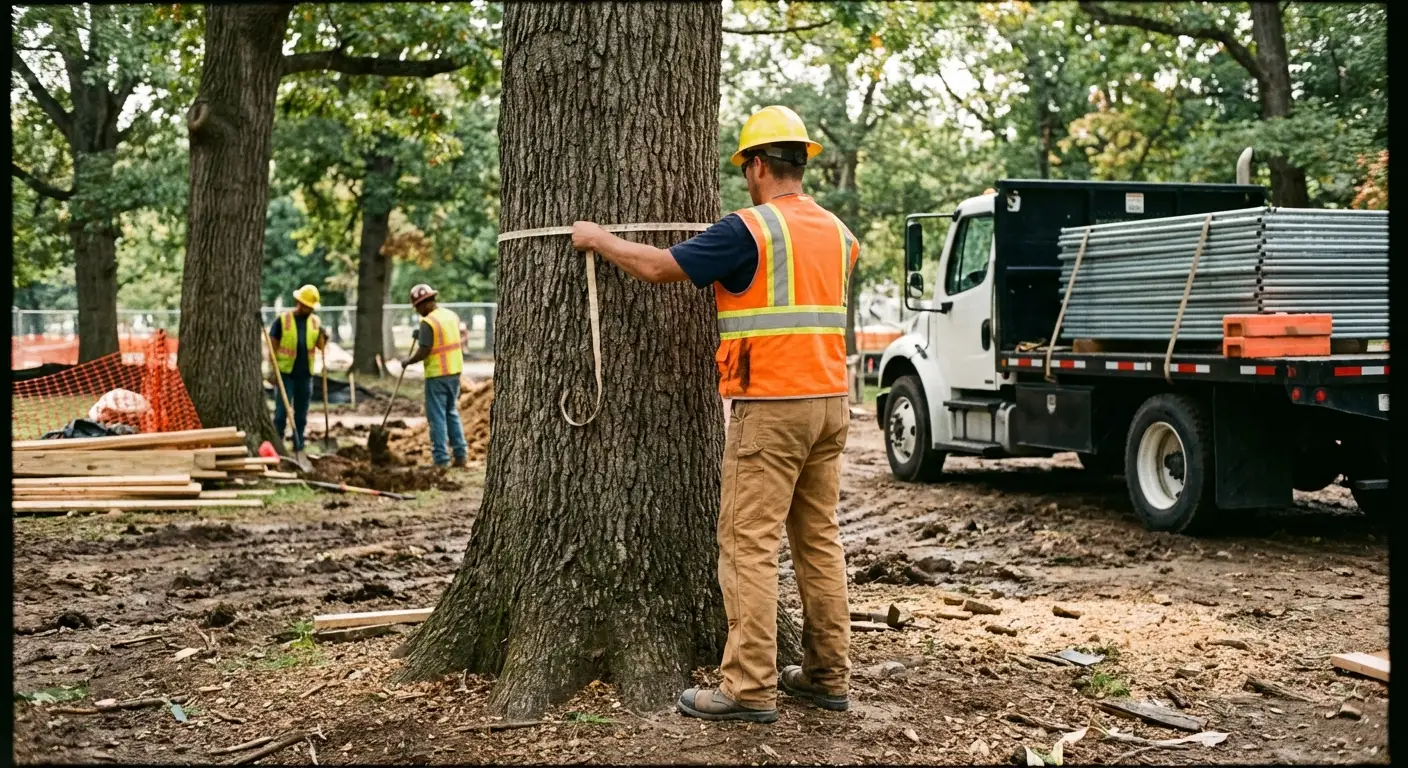
Root zone calculation for Tree Protection Zone (TPZ) fencing in Yorba Linda determines the minimum distance temporary barriers must be placed from a tree’s trunk to avoid root damage. The standard method uses trunk diameter at breast height (DBH), applying a multiplier—often 1.5 feet per inch of DBH—to establish the protected radius. This is required under Yorba Linda Municipal Code §15.24 for developments in neighborhoods like East Lake Village and Old Town Yorba Linda.
Key Terminology
- Tree Protection Zone (TPZ)
- Area around a tree trunk where soil disturbance is restricted to protect roots.
- Critical Root Zone (CRZ)
- Radius from trunk equal to one foot per inch of trunk diameter at breast height.
- Root Zone Calculation
- Method used to determine minimum setback for temporary fencing near protected trees.
- Yorba Linda Municipal Code §15.24
- Local ordinance requiring TPZ fencing during construction near designated heritage trees.
- Temporary Protective Fencing
- Non-permanent barrier installed to shield tree roots from compaction or excavation.
- Drip Line Reference
- Outer edge of tree canopy used as a field proxy for root zone estimation.
In Simple Terms
In Yorba Linda, temporary fencing near trees must respect the Tree Protection Zone (TPZ) to comply with local standards. The root zone is typically calculated using trunk diameter at breast height (DBH), with a standard ratio of 1.5 feet of radius per inch of DBH. Installations in Fairmont Hill, East Lake Village, and Old Town Yorba Linda often require TPZ fencing due to mature tree canopies. Equipment like tree protection zone rentals and concrete steel bases help meet stability and setback rules without damaging roots. Always verify TPZ boundaries before installing near Yorba Linda Country Club or zero trip hazard setups on Historic Main Street.
Root Zone Calculation for TPZ Fencing: Compliance Guide — Part 3
Guidelines detail root zone depth, soil type, and climate factors for compliance in Yorba Linda, CA.
| Root Zone Depth | Minimum 24 inches to ensure stability and compliance with local regulations. |
|---|---|
| Fence Post Diameter | Typically 4 to 6 inches to accommodate TPZ fencing requirements. |
| Soil Type Consideration | Sandy loam common in Yorba Linda requires deeper root zones for anchoring. |
| Distance from Rim Crest Trailhead | Maintain at least 10 feet clearance from natural landmarks to comply with preservation rules. |
| Climate Impact | Design accounts for 1317 cooling degree days and low precipitation of 6.1 inches annually. |
| Compliance Standards | Meets OSHA and EPA guidelines for temporary fencing installations. |
| Signage Interval | Every 30 linear feet |
Request TPZ Fence Layout Support
Confirm root zone calculations, compliance checks, and fence placement in Yorba Linda.
TPZ Fencing Mistakes That'll Cost You in Yorba Linda
After 17 years installing TPZ fencing around Yorba Linda's oaks, we've seen how small errors trigger big penalties. Here's what fails inspections.
Measuring from trunk only
Undersized TPZ exposes roots to damage, risking fines and tree health in Old Town Yorba Linda's heritage oaks.
Measure from drip line outward — we add 18" buffer for wind load resistance.
Ignoring soil type
Sandy soils in Vista Del Verde require wider zones — compacted clay holds roots tighter near the surface.
Bring a soil probe to verify texture before setting TPZ fencing.
Using standard fence posts
Rigid posts crack roots when ground shifts during Santa Ana winds — we've seen it snap irrigation lines too.
Switch to steel bases with flexible couplers that move with the tree.
Skipping root mapping
Hit a major root while driving posts near Yorba Linda Country Club and you'll owe for tree valuation reports.
Air-spade test spots marked by our surveying team before installation.
Forgetting canopy spread
Narrow zones on palm trees still damage fronds when equipment swings through — common in historic districts.
Measure vertical clearance too; we use telescoping poles for height checks.
Protecting the Root Zone: Our Precision Approach to TPZ Compliance
I remember a massive windstorm back in 2006 that taught us everything about site stability. We don't just throw up a barrier and walk away. We treat every tree like it's part of the structure. Our team calculates the exact radius needed for tree protection zones to ensure we meet every tree protection ordinance requirement.
-
Critical Root Zone Mapping
We start every job by identifying the drip line of the tree to ensure our tree protection zones cover the actual biological needs of the plant. Driving posts into the root zone kills the tree's ability to take up water. We respect these boundaries to prevent long-term site damage.In PracticeCalculating the radius around an oak in Vista Del Verde before setting any equipment.
-
Non-Invasive Perimeter Setting
Our crew uses specific post driven fence methods that avoid heavy excavation. We know that cutting through primary structural roots causes immediate instability. We keep the weight of the fencing away from the trunk to avoid soil compaction issues.In PracticeUsing lightweight chain link panels to skirt around sensitive root systems.
-
Compaction Mitigation
Heavy machinery crushes the air pockets in the soil that roots need to breathe. We deploy zero trip hazard setups that allow workers to move around the tree without packing the dirt tight. This keeps the root zone healthy and compliant with local tree protection ordinances.In PracticeWalking the perimeter manually in Fairmont Hill instead of driving a skid steer.
-
Wind Load Stability
In Yorba Linda, those Santa Ana winds hit hard. If we place a fence too close to a tree, the wind catches the fence and puts lateral pressure on the root zone. We utilize wind load resistance features to ensure the fence stays upright without needing deep, destructive footings.In PracticeSecuring concrete steel bases far enough from the trunk to avoid root interference.
We get it secured, fast. No excuses.
Root Zone Calculation for TPZ Fencing: Compliance Guide — Part 4
Understanding root zone calculations ensures TPZ fencing installation complies with Yorba Linda regulations and protects mature trees effectively.
What is the importance of root zone calculation in TPZ fencing?
Root zone calculation protects tree roots from construction damage, especially around Yorba Linda Country Club, where mature trees require precise fencing placement.
How is the root protection zone (RPZ) determined for trees in Vista Del Verde?
RPZ is calculated based on tree diameter at breast height (DBH), ensuring fencing encloses sufficient space to prevent root disturbance during site work.
Are there local regulations governing TPZ fencing near Yorba Linda High School?
Yes, local ordinances in Yorba Linda mandate TPZ fencing around protected trees during development to maintain compliance with city codes.
What are common challenges installing TPZ fencing in Fairmont Hill residential areas?
Challenges include uneven terrain and proximity to infill construction requiring careful measurement to avoid root damage and comply with zoning rules.
How does Yorba Linda's climate affect root zone protection requirements?
With 1317 cooling degree days and low precipitation, soil compaction risks increase, making accurate TPZ fencing placement critical to tree health.
What practical steps does Imperial Highway Fence Rental take to ensure proper root zone fencing?
Field crews measure DBH onsite, adjust fencing placement for slopes, and coordinate with site managers to meet Yorba Linda's environmental standards.
TPZ Root Zone Calculations for Fence Compliance
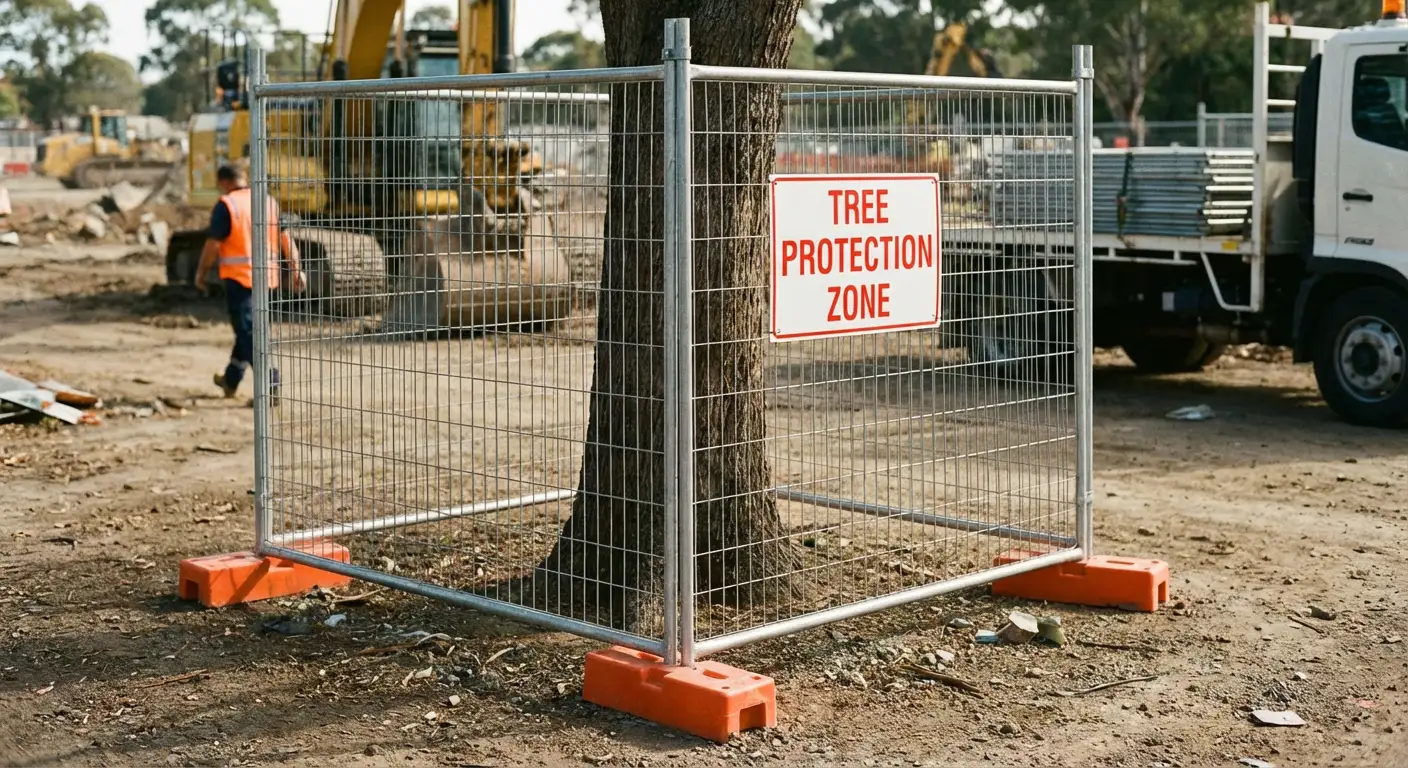
Use measured root zone limits and TPZ fencing layouts to support compliance in Yorba Linda, CA, for site protection and inspections.
Local fence rental support for compliance-focused site planning.